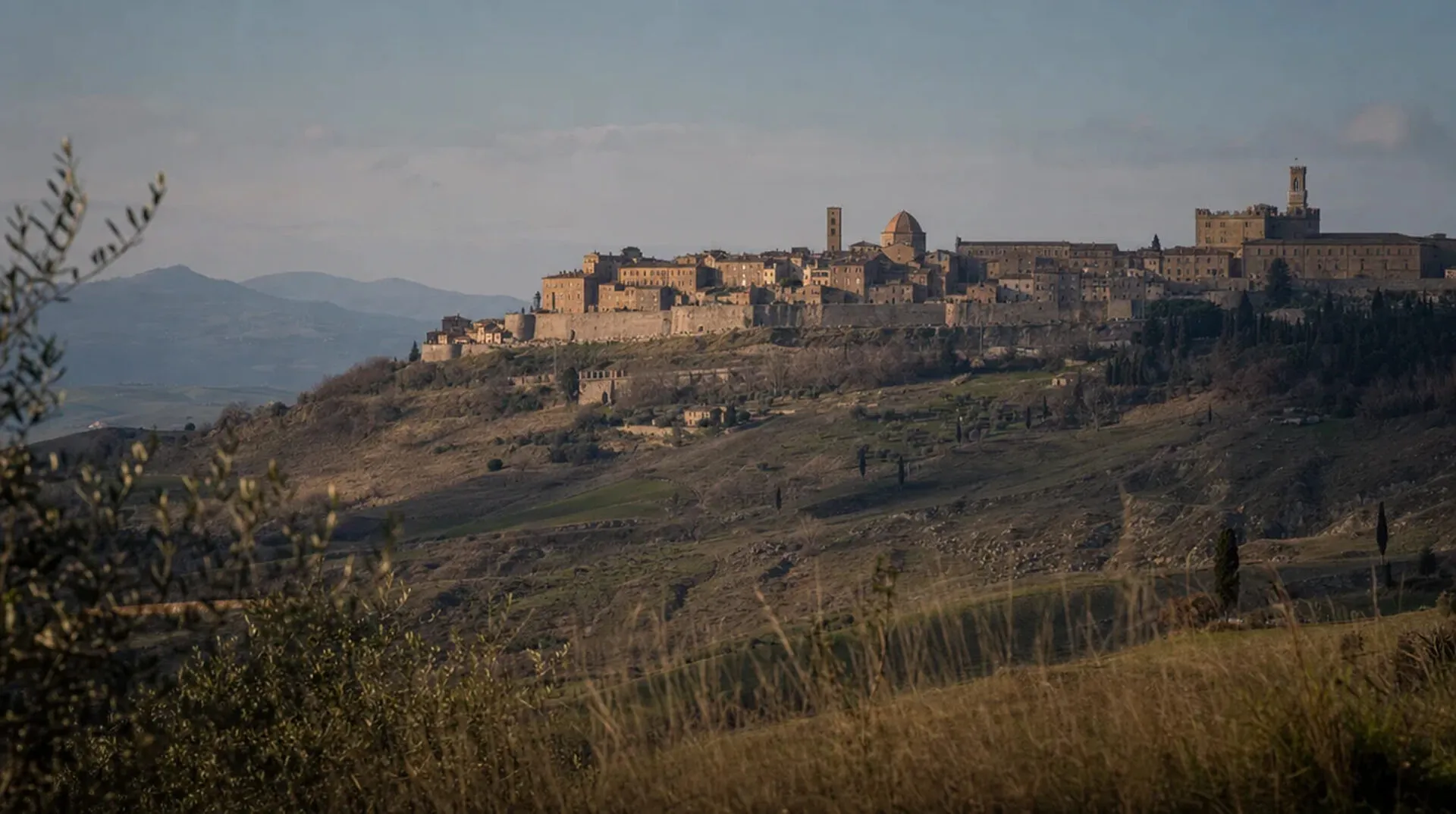
The Etruscans Were Here First
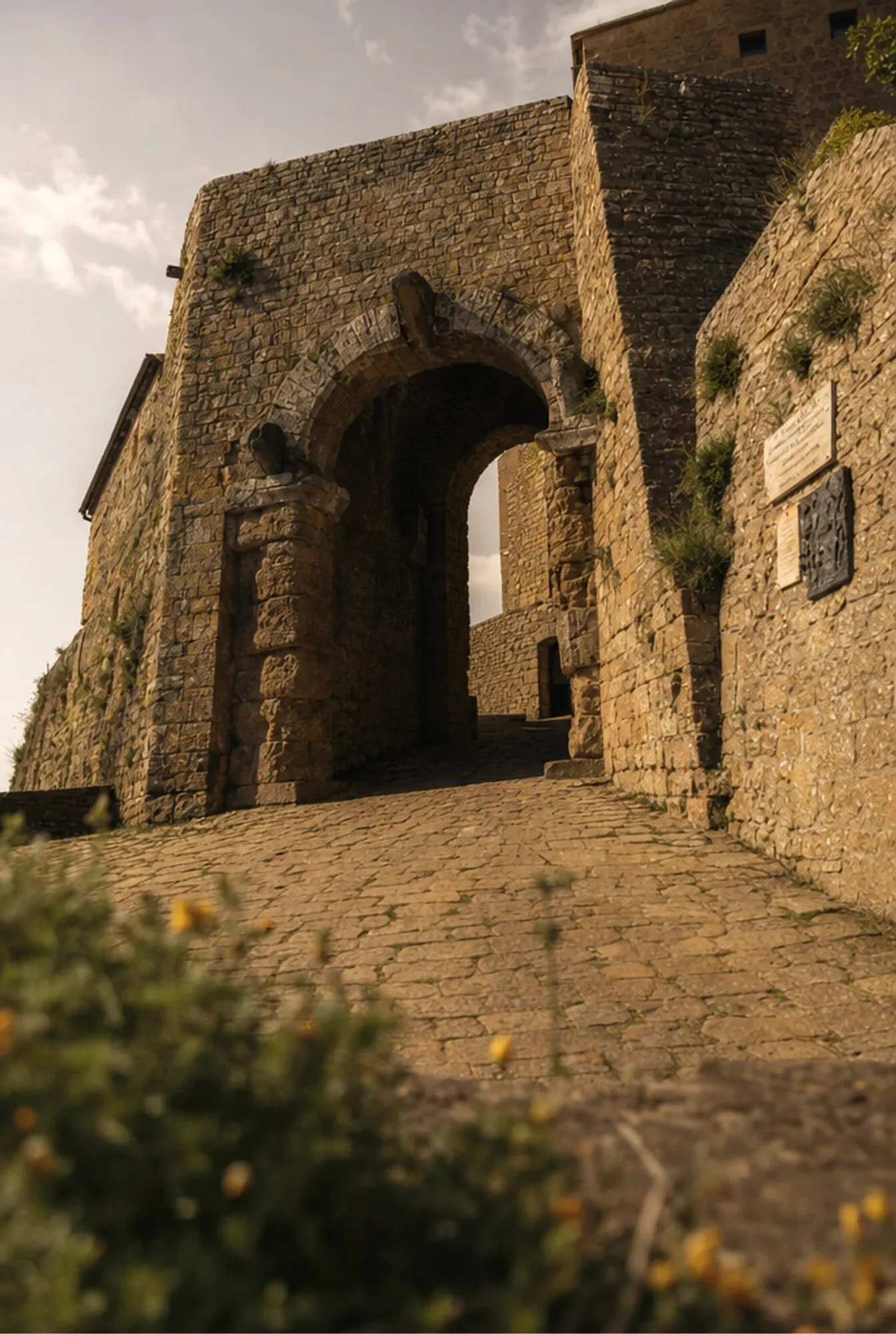
Long before Rome, this was Velathri, one of the great cities of the Etruscans, and their fingerprints are still all over it. The most striking is the Porta all'Arco, a city gate that has stood for roughly two and a half thousand years. Look up as you pass beneath it and you will see three worn stone heads set into the arch, their features long since eroded to blank stumps. Nobody knows for certain who or what they were meant to be. That uncertainty, hanging over a gate older than most countries, is exactly the sort of thing Volterra does well.
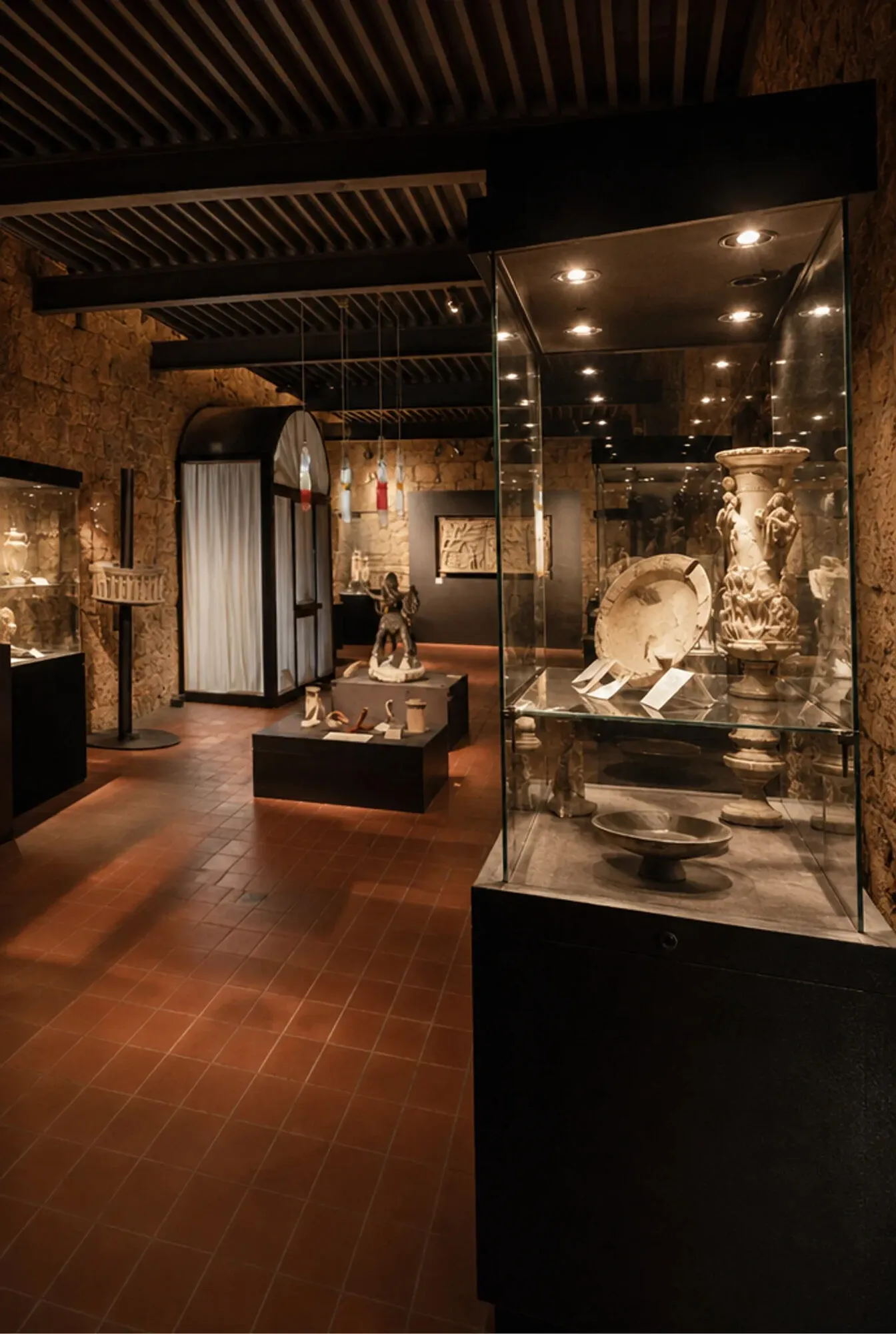
To understand the people who built it, spend an hour in the Guarnacci Museum, which opened its doors in 1761 and is among the oldest public museums anywhere in Europe. It holds one of the finest collections of Etruscan art in existence: hundreds of carved funerary urns, everyday objects, and one small bronze figure that stops everyone in their tracks. It is a young man, stretched impossibly long and thin, and it looks so startlingly modern that a famous twentieth-century sculptor might have made it yesterday. The Etruscans got there two and a half millennia early. On the edge of town, the old acropolis still shows the footings of their temples and the clever cisterns they cut to catch rainwater, since the hill has no spring of its own. These were resourceful people, and Volterra remembers them better than almost anywhere.
Then Came Rome
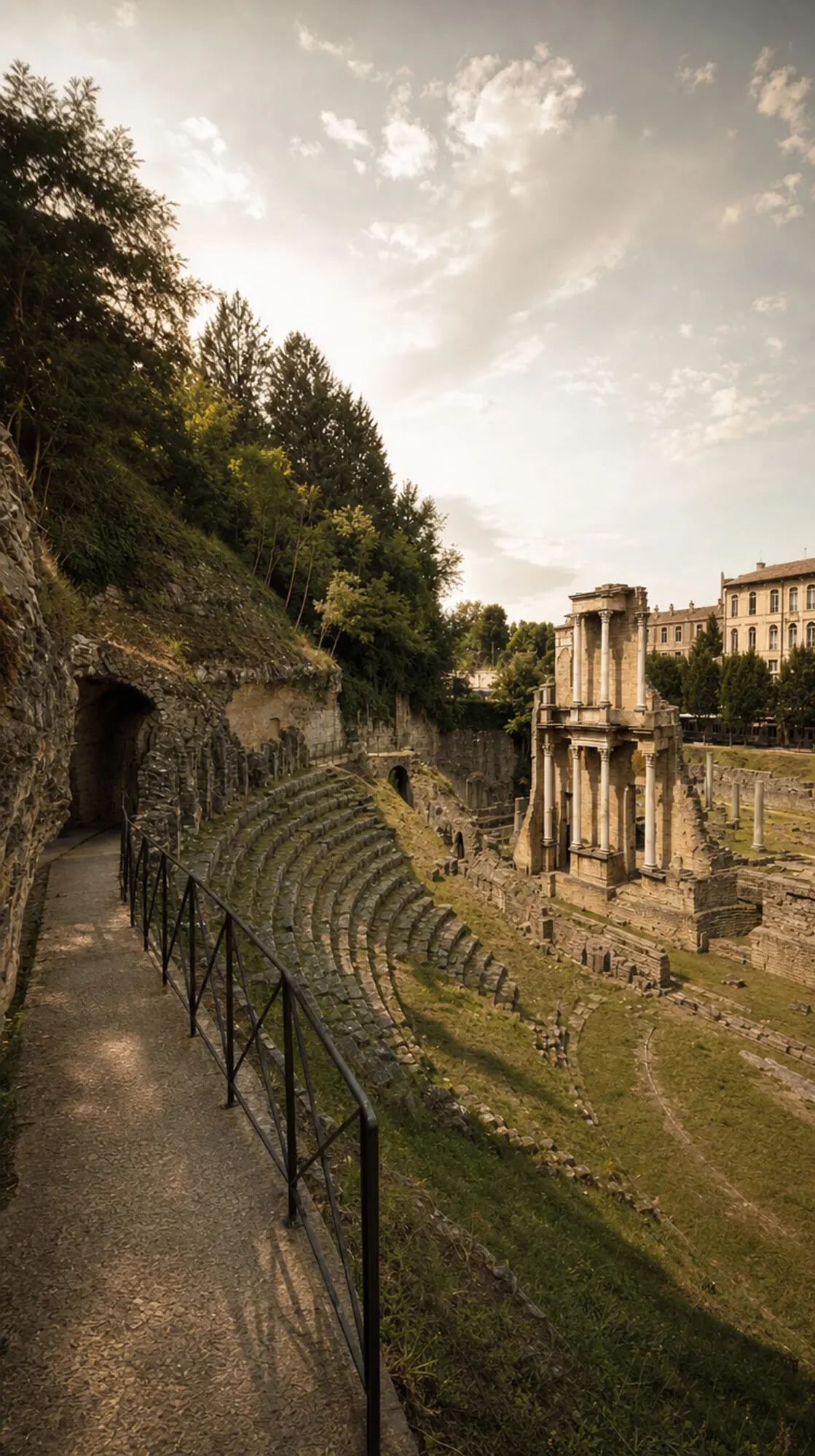
Below the northern walls lies the next layer down, or rather up, in time. The Roman theatre is one of the best preserved in Italy, a graceful semicircle of stone seats built in the first century before Christ, with the remains of a bath complex behind the stage. It once held several thousand spectators, and enough of it survives that you can easily people the empty seats in your mind. Here is a small piece of local wisdom worth knowing: you can pay to walk among the ruins, or you can simply stroll the city walls above and look straight down onto the whole site for nothing at all. The view from up there, with the theatre laid out below and the hills beyond, is arguably the better one anyway.
The Middle Ages, and a Very Unusual Restaurant
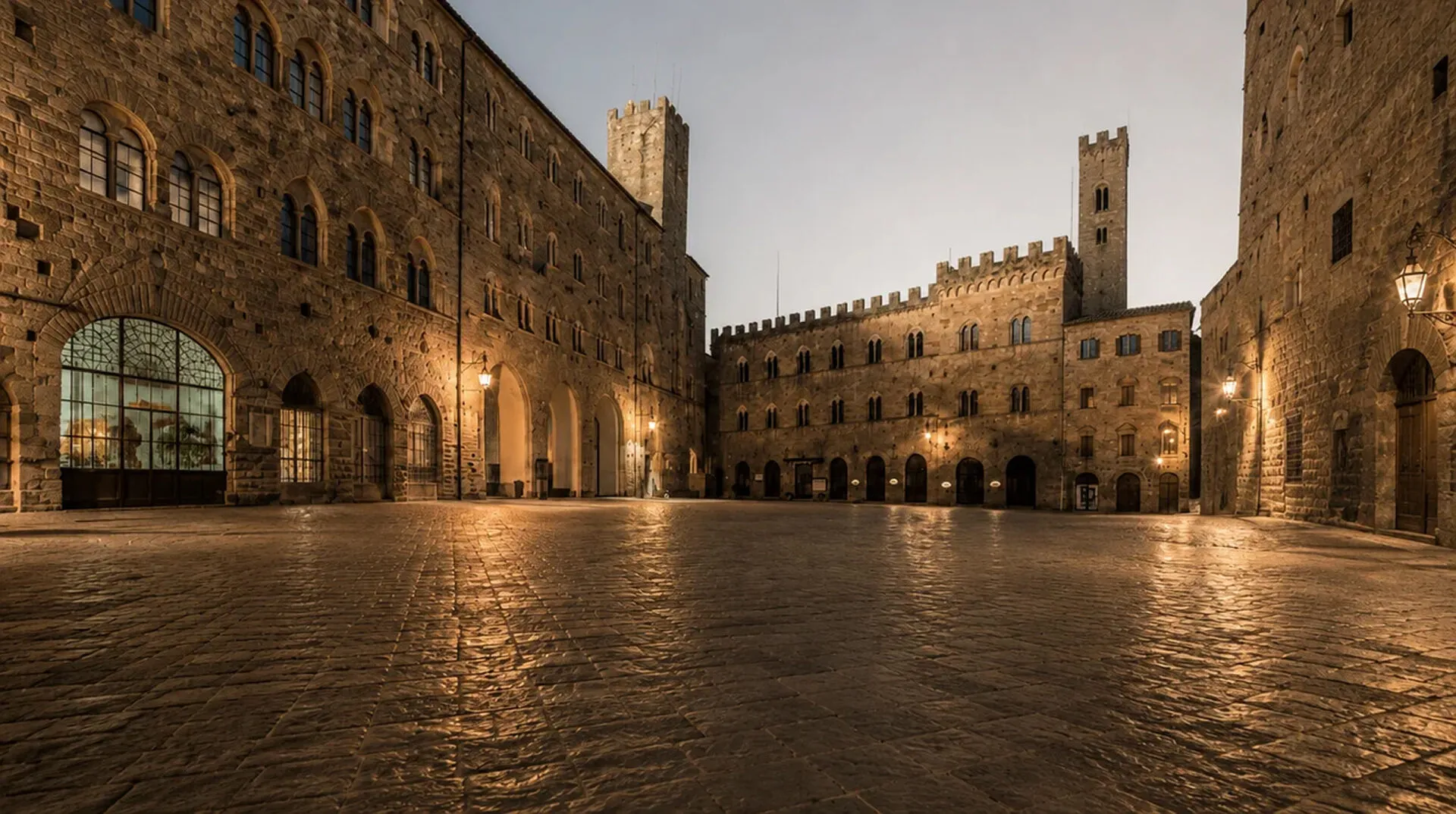
Climb up into the town and the centuries close in around you. The heart of it is the Piazza dei Priori, a severe and handsome medieval square dominated by the Palazzo dei Priori, which claims the title of the oldest town hall in all of Tuscany, begun in the early thirteenth century. Florence borrowed the idea for its own famous palace, which tells you something about Volterra's standing in those days. Nearby stands the cathedral, plain outside and richly worked within, worth a quiet few minutes.
Above it all looms the Medici fortress, a great fist of a building thrown up to remind the town who was in charge after Florence took control. It still does a version of that job today, because for well over a century it has served as a prison, which makes it one of the few fortresses in Tuscany you admire strictly from the outside. There is a curious footnote here. On certain evenings, the inmates cook and serve dinner to the public within the walls, an event that books out far in advance and is, by all accounts, remarkably good. It is the only reservation in Tuscany where the chef cannot leave. Only in Volterra.
The City of Alabaster
If one craft belongs to this town, it is alabaster. The soft, translucent stone has been mined in the surrounding hills and carved here since Etruscan times, worked into urns and vases and lamps and figures that seem to hold the light inside them. The tradition is still alive, and that is the real pleasure. Wander the old streets and you will find workshops where artisans sit at their benches, turning and shaping the stone in a haze of pale dust, and many are happy for you to watch. There is something quietly moving about it, a craft handed down across a hundred generations, still being practiced by hand a few steps from where the Etruscans first tried it.
For the fuller story, the small alabaster museum, housed in a medieval tower, lays out the history and shows what the finest hands can do with the stone. And if a piece catches your eye, buy it from the maker rather than a souvenir shelf. A small alabaster bowl carried home glows on a windowsill for years, and it comes with a story no factory object can match.
The Views, and the Broken Land
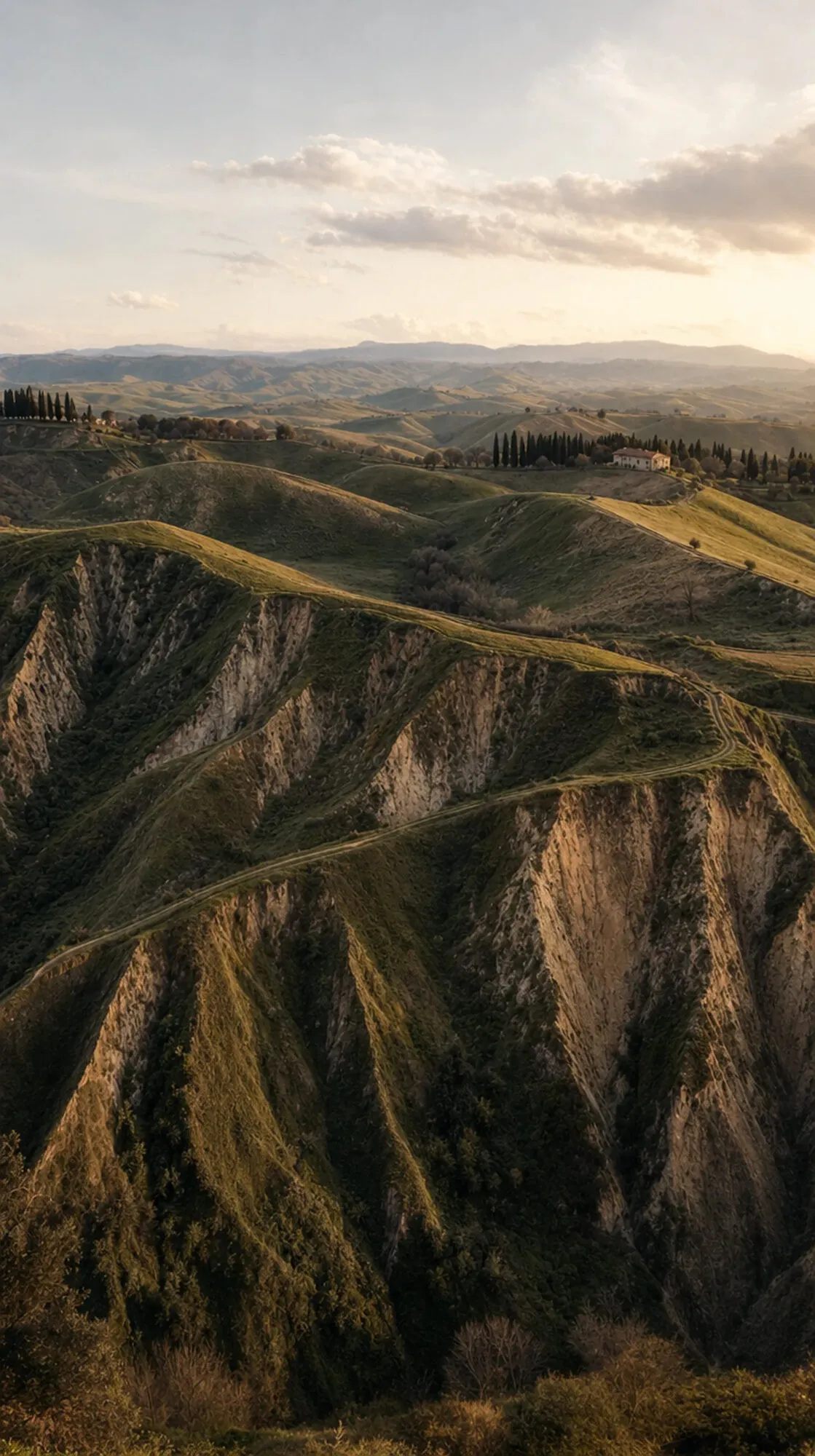
Volterra sits high and alone, so the views are long in every direction, out over a wide sweep of hills toward the distant sea. Walk any stretch of the old walls at the right hour and the whole of central Tuscany seems to open beneath you. For something stranger, head to the edge of town to see Le Balze, a series of dramatic clay cliffs where the ground has crumbled and slid away over centuries, swallowing roads, buildings, and even a medieval church as it went. It is a reminder that even a town this ancient sits on shifting ground, and it is at its most haunting toward sunset, when the raw earth glows gold and the emptiness beyond the edge feels very old indeed.
One light aside, since visitors always ask. Volterra played a starring role in a famous series of vampire films, as the home of an ancient and well-dressed clan. The town leans into it gently, though the films themselves were shot elsewhere, in a town to the south. The real Volterra needs no fiction. Its actual history is stranger and grander than anything a screenwriter could invent.
How to Do It
A few practical notes to smooth the day. The old town is closed to traffic, so leave the car in one of the lots below the walls and walk up. If you plan to visit several sites, the combined town pass is good value and covers the museum, the theatre, the alabaster collection, the town hall, and the acropolis over a couple of days. Wear proper shoes, since Volterra is all slopes and old stone, and bring a layer even in summer, because the hill catches a wind that the sheltered valleys never feel.
Half a day covers the highlights, but a full day lets the place breathe, with time for the museum, a workshop, a long lunch, and an hour on the walls at the end when the crowds thin and the light turns. From the estate it is a straightforward drive north, and one of the more rewarding days you can spend inland. Tell us the night before and we will point you to the right car park, the best workshop to watch, and a table worth booking. Volterra has been receiving visitors for three thousand years. It will make room for you too, and it will not try to sell you anything you do not want, which is more than most famous towns can say.
Frequently Asked Questions
How far is Volterra from Villa Dolce Vita?
About an hour and fifteen minutes by car, heading north. It makes a comfortable day trip with time for museums, a workshop visit, and a long lunch.
What is Volterra known for?
Its remarkable layers of history, from the Etruscan Porta all'Arco and the Guarnacci Museum to a Roman theatre and medieval streets, and above all its centuries-old alabaster craft, still practiced in workshops around town.
Can I watch alabaster being carved?
Yes. Several workshops in the old town let you watch artisans shape the translucent stone by hand, and the alabaster museum tells the fuller story. Buying a piece directly from the maker is the finest souvenir Volterra offers.
Is there a combined ticket for the sights?
Yes, a town pass covers the main sites, including the Etruscan museum, the Roman theatre, the alabaster collection, the town hall, and the acropolis, over a couple of days. It is good value if you plan to see several.
How long do I need in Volterra?
Half a day covers the essentials, but a full day lets you take in the museum, a workshop, lunch, and the views from the walls without rushing. Wear good shoes and bring a light layer, as the hilltop catches the wind.