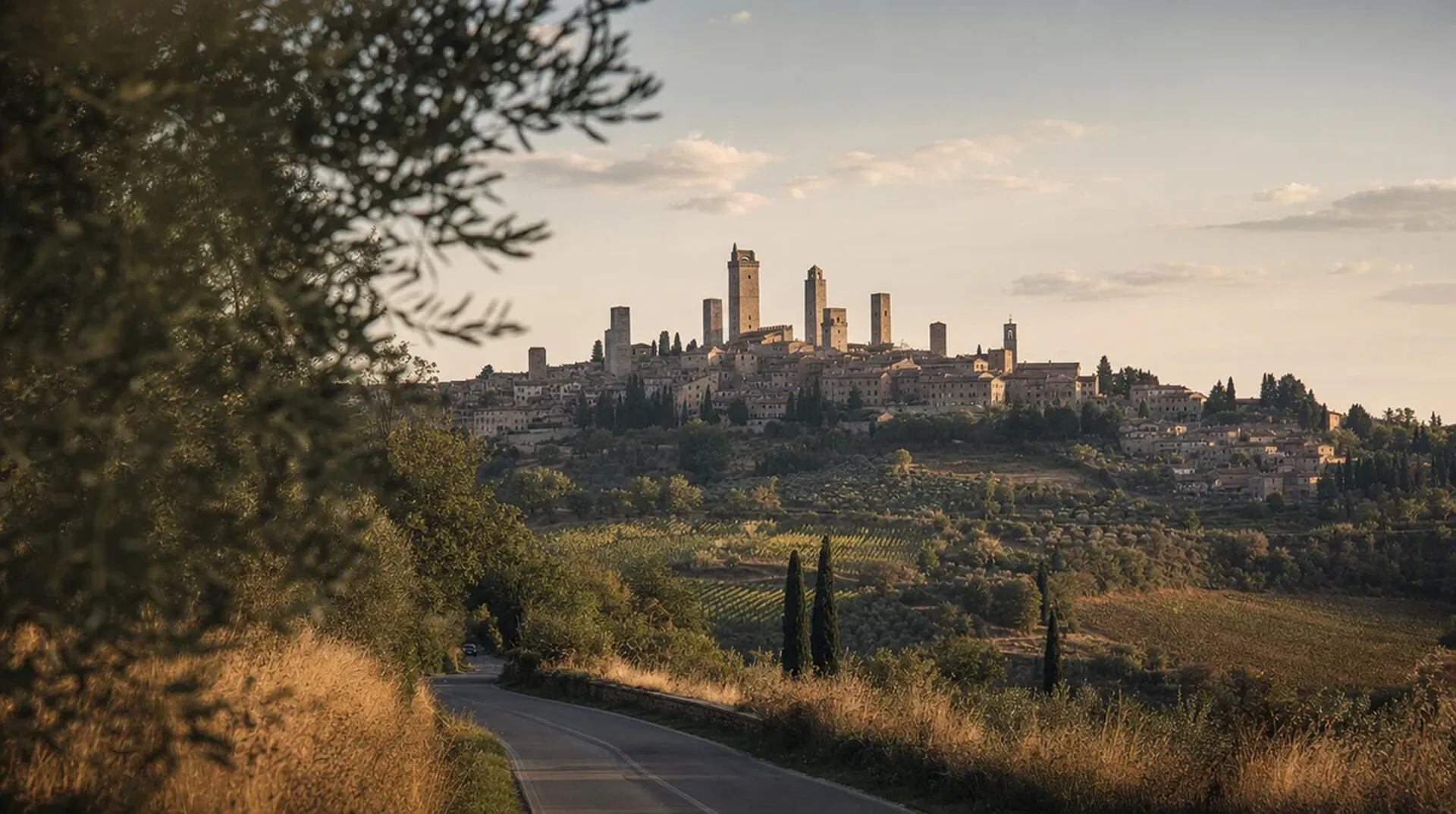
The Towers Were a Competition
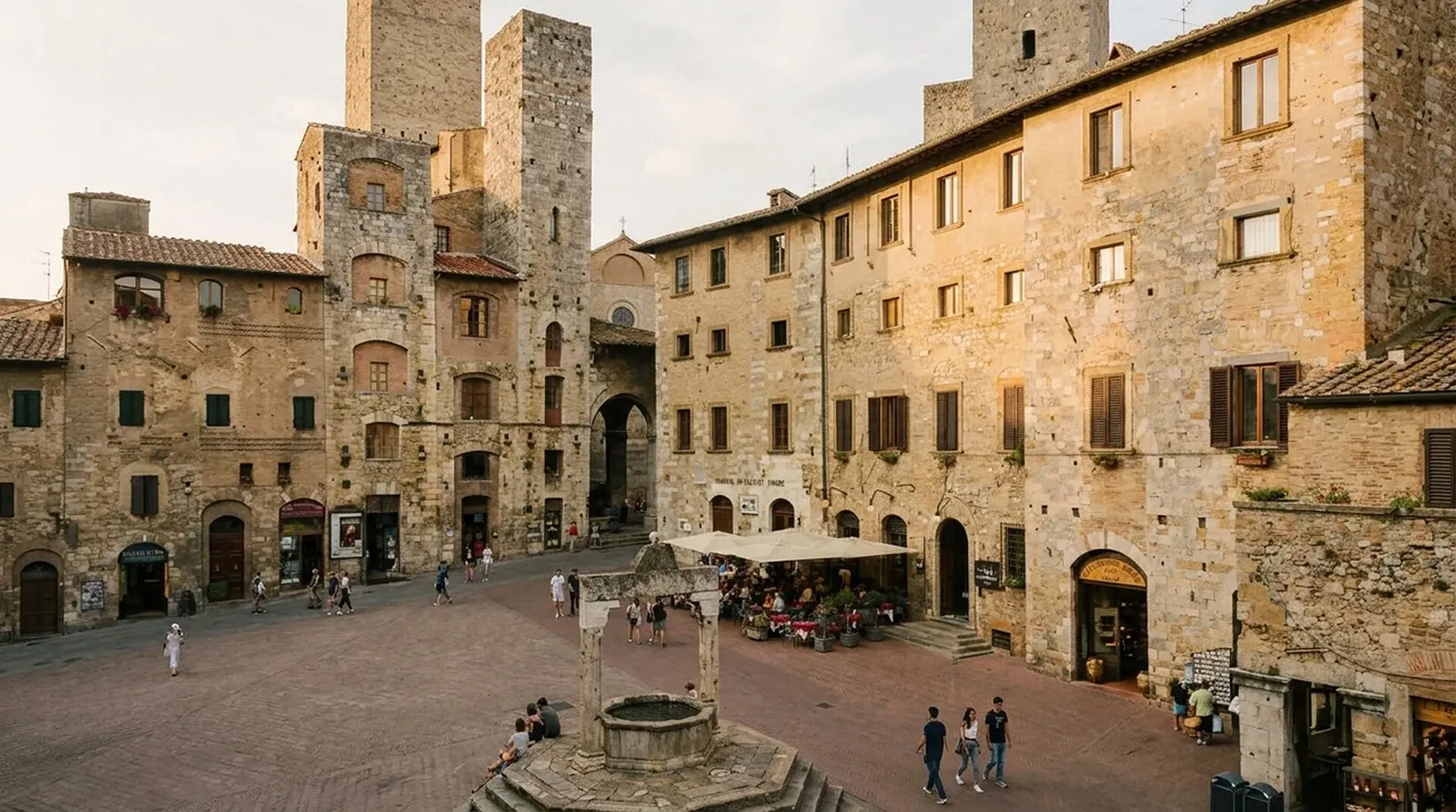
There were once more than seventy of them. Fourteen survive, and that alone is remarkable, because most Italian towns lost theirs to time, war, and common sense. Here they went up between the eleventh and thirteenth centuries for one reason above all others: pride. The great families raised towers to outdo one another, higher and higher, until the town passed a law forbidding anyone to build taller than the municipal tower. Two rival families, refusing to be beaten, simply built a matching pair side by side. You can still see them. Petty ambition, frozen in stone, and rather beautiful for it.
The one to climb is the Torre Grossa, the tallest at fifty-four meters, begun in 1300 and attached to the old town hall. There are a little over two hundred steps, a spiral, a final ladder, and a low ceiling that will humble the tall. But the view at the top is the one you came for. Terracotta roofs below, the other towers close enough to touch with your eyes, and the countryside rolling out in every direction until it dissolves into haze. Go up near the end of the afternoon if you can. The light does most of the work.
Two Squares, One Well
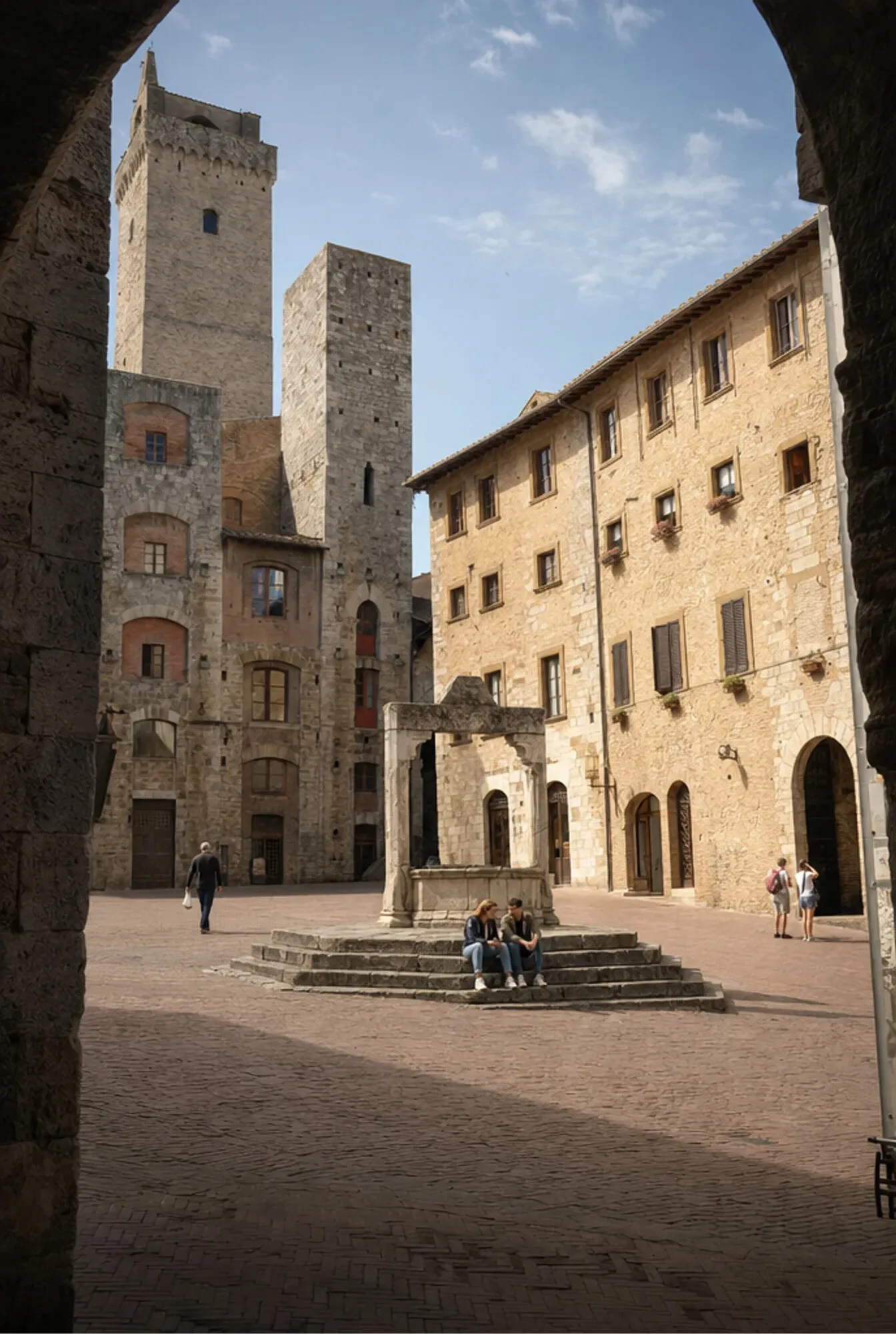
The heart of the town is really two hearts, side by side. Piazza della Cisterna takes its name from the old cistern beneath it, capped by a stone well that has watched over the square for centuries. The bricks are laid in a herringbone pattern on a gentle slope, which plays a small trick on the eyes, so that everyone appears to be walking uphill whether they are or not. Sit here a while and watch it happen. It is quietly funny.
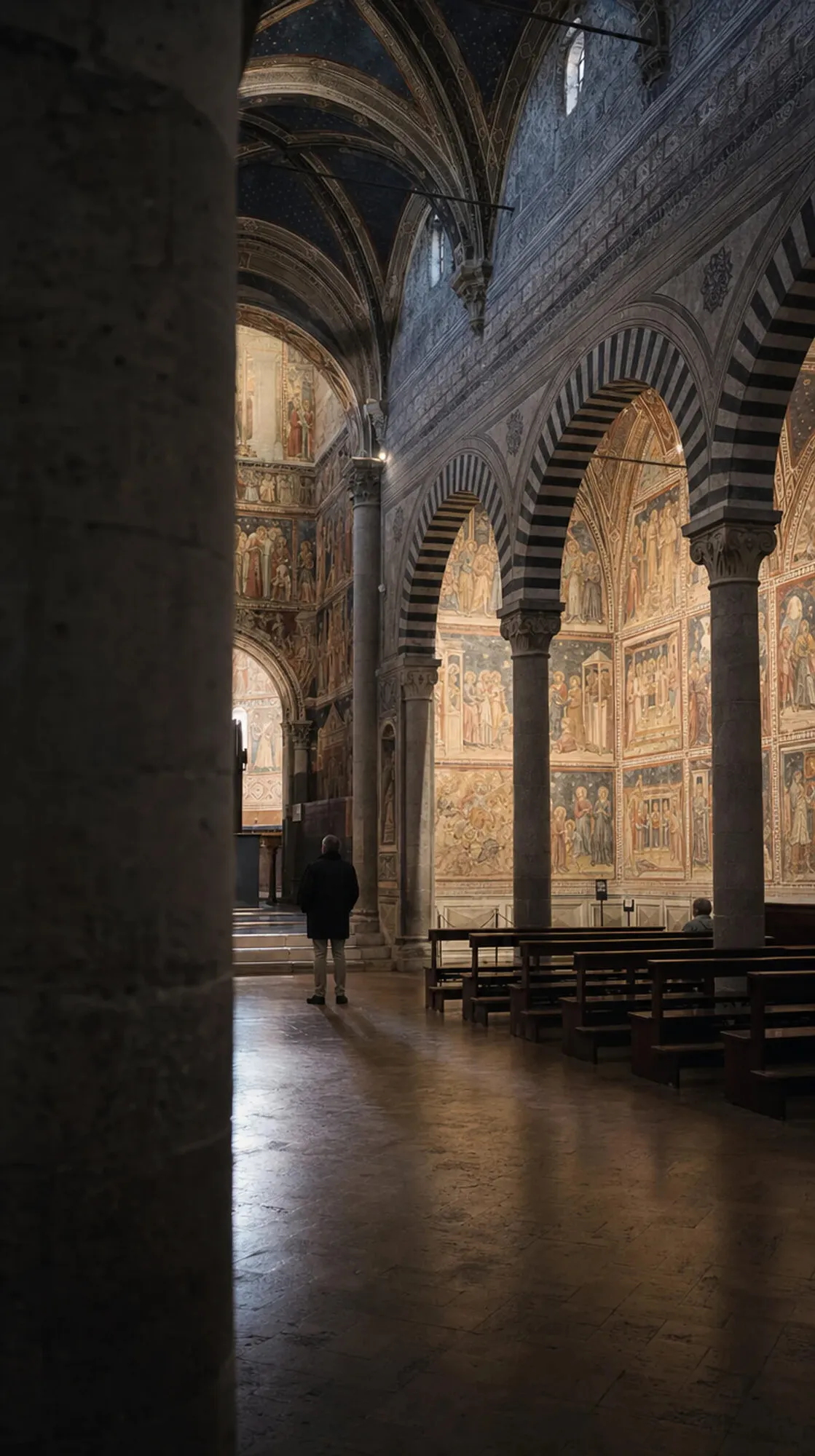
A few steps away lies Piazza del Duomo, and with it the Collegiata, the town's great church. From the outside it keeps its secrets, plain and unassuming. Inside, the walls open into frescoes that have not faded in six hundred years, whole testaments painted floor to ceiling in colors that still hold. Give it twenty minutes, more if the crowds are thin. This is the sort of room that rewards standing still.
Around the squares run lanes barely wide enough for two, threaded with small workshops and enoteche. The town sat on the Via Francigena, the old pilgrim road from the north down to Rome, and it grew rich feeding and sheltering the faithful. That habit of hospitality never really left. It simply changed its clientele.
Wine You Cannot Get at Home
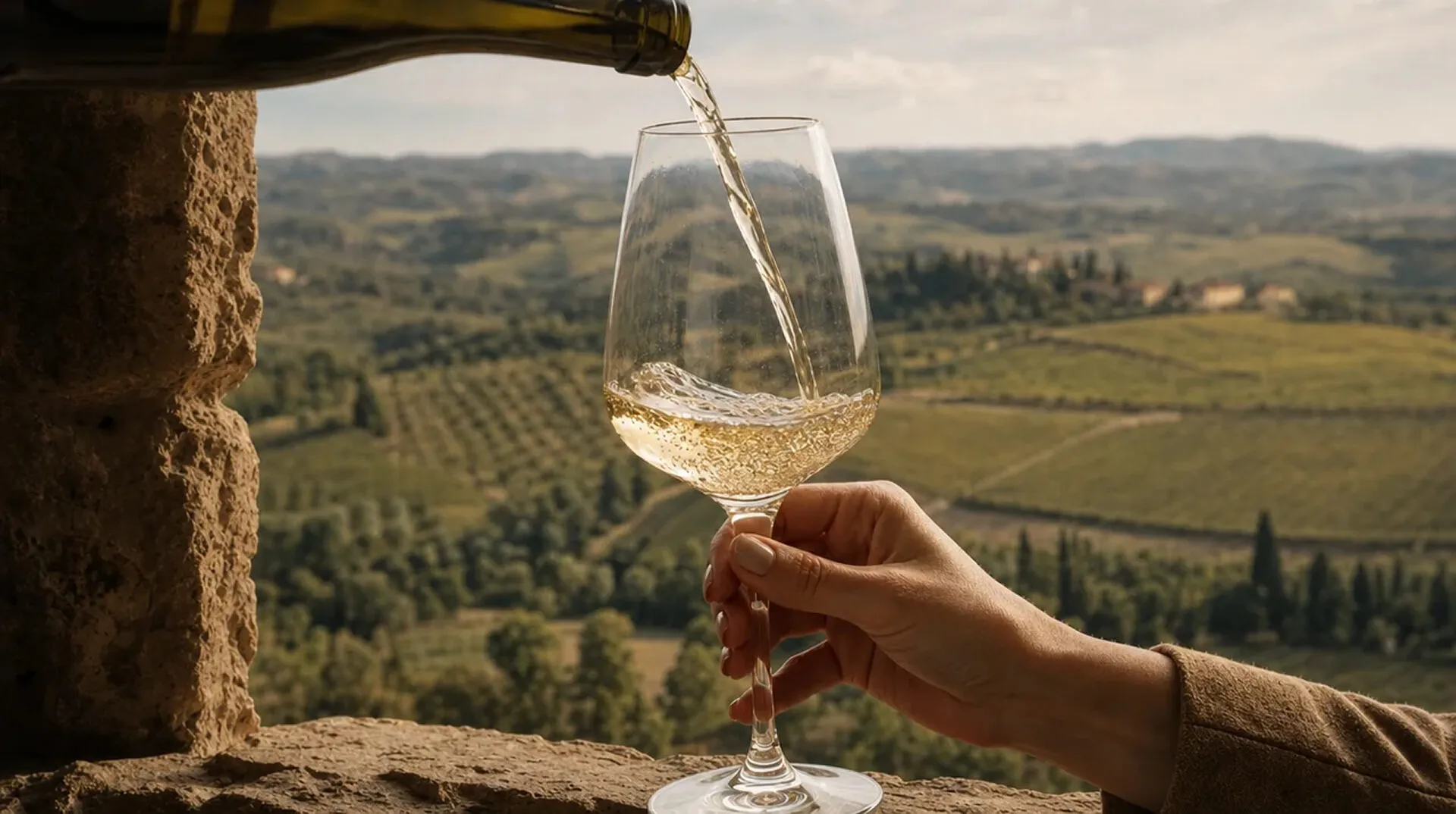
San Gimignano has one great wine, and it is white, which surprises people who arrive expecting Tuscany to be all red. Vernaccia di San Gimignano is crisp and mineral and bright, the kind of thing you want on a warm afternoon with nothing pressing on the calendar. It carries a small piece of history too. Back in 1966 it became the first Italian wine of any color to earn the country's official mark of quality, which the locals will mention with the studied casualness of people who are, in fact, very proud.
Taste it at an enoteca in town, or climb to the Rocca, the ruined fortress at the top, where a small museum tells the story of the wine and pours a glass at the end. The view from up there is the reward either way, so you win no matter what is in the glass. Just now, a note in fairness: Italian law has paused the sale and serving of wine while a temporary regulation is in force, and we follow it to the letter. Take the tour for the vines and the history, and toast the place properly another season.
The Gelato Question
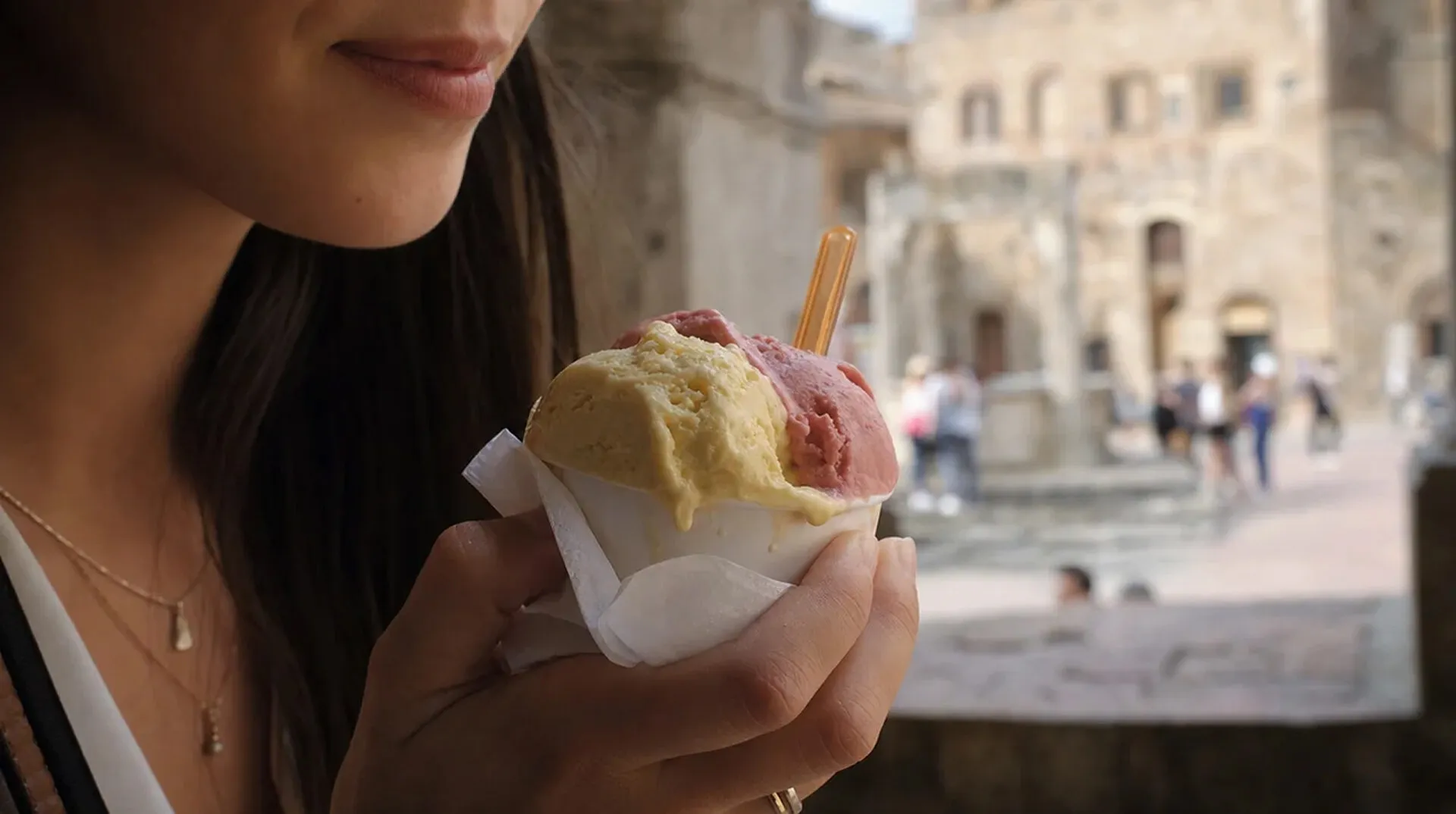
We should be honest about one thing. A fair number of visitors come to San Gimignano less for the towers than for the ice cream, and we understand entirely. On Piazza della Cisterna sits Gelateria Dondoli, run by a man who has won the gelato world championship more than once, which is a sentence that should not be possible and yet here we are. The flavors run to the inventive. Saffron and pine nut. Raspberry and rosemary. There is a queue, always, and it looks worse than it is, because it moves like a well-run kitchen. Join it. Order something you would never order at home. Eat it in the shade of the covered loggia while the town does its slow medieval business around you.
How to Do It Properly
A few things learned the hard way, offered as a host would offer them. The town is small enough to walk in a morning, but walking through and taking it in are not the same, so give it more time than the map suggests. The crowds thicken between ten and four, and in high summer the weekends are best avoided entirely. Arrive early. The lanes belong to almost no one at nine, and the walls at that hour give you the countryside without another soul in the frame.
Leave the car in one of the lots below the walls, since the old town is closed to traffic, and make the short climb up on foot. Wear something honest on your feet. These are medieval streets, and they were not laid with comfort in mind. Bring a hat in summer and a light layer for the tower, which catches the wind.
From the estate, the drive up is part of the pleasure. Wind north through the wine country, spend the middle of the day among the towers, and time your return for the golden hour, when the whole of the Val d'Elsa turns the color of the stone. If you would rather not drive, mention it at breakfast and we will help you arrange a car and a guide who actually knows the place.
San Gimignano has been standing on that hill, doing more or less exactly this, for the better part of a thousand years. It does not need us to talk it up, and it has never asked for the crowds it draws. Go early, walk slowly, look up often. The towers have waited this long. They will wait for you.
Frequently Asked Questions
How far is San Gimignano from Villa Dolce Vita?
Roughly ninety minutes by car, heading north through the Tuscan wine country. It makes a comfortable day trip with time to spare for lunch and a slow wander.
How long do I need to see San Gimignano?
Half a day covers the highlights, though a full day lets you climb the tower, see the frescoes, and still linger in the squares without rushing. Arriving early is the single best decision you can make.
Can you climb the towers?
Two are open to the public, and the tallest, Torre Grossa, is the one to climb. Expect just over two hundred steps and a view worth every one of them.
What is San Gimignano famous for besides the towers?
Vernaccia di San Gimignano, a crisp white wine with deep local roots, and Gelateria Dondoli, whose gelato has won world titles. The frescoes inside the Collegiata are a quiet marvel in their own right.
When is the best time to visit?
Early morning, before the day-trippers arrive, and outside the summer weekends if you can manage it. Spring and autumn are kindest of all, with soft light and thinner crowds.