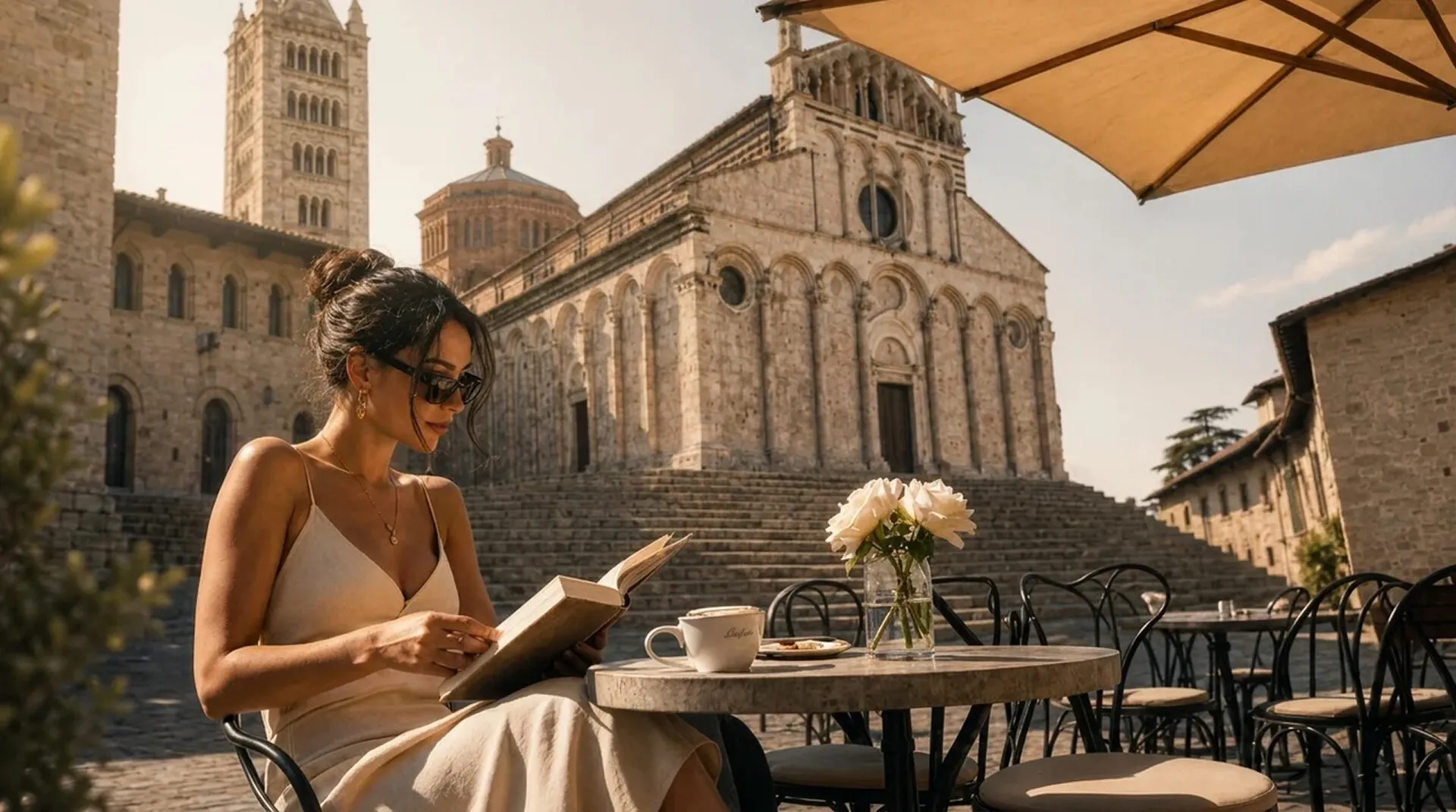
The Market Comes Early
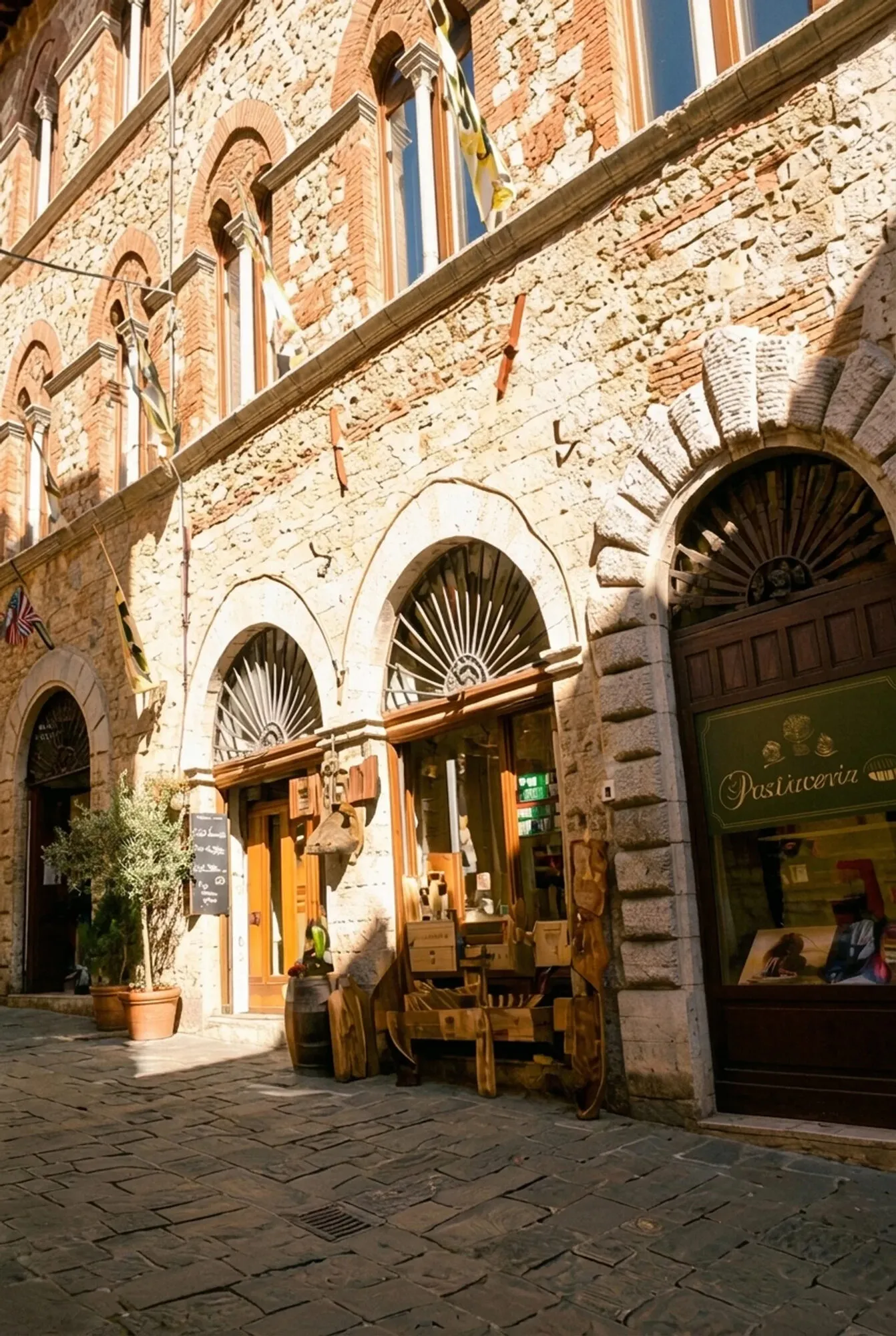
The morning belongs to work and errands, and both are done before the heat arrives. In every town in the Maremma there is a market, on its appointed morning, and it is where the day's real business happens. The stalls go up early. Tomatoes in heaps that smell of the vine, peaches so ripe they bruise at a glance, bread still warm, cheese cut to order, flowers, fish, and a great deal of loud and friendly haggling that is half commerce and half theater. Go early, while the light is soft and the vendors are fresh, and buy the things that look best rather than the things you planned. The person who grew the tomato is standing right there, and they will tell you when to eat it. Listen to them.
This is the hour to see a town awake and unguarded. Shopkeepers sweep their steps. Old men claim their benches. The espresso machines hiss without pause. By the time the sun climbs high, the shopping is done, the day's food is bought, and everyone is thinking about the same thing, which is lunch, and after lunch, the sacred pause.
Noon, and the Wisdom of Stopping
Here is the part visitors find hardest to accept, and the part they miss most once they are home. In the middle of the day, Tuscany more or less closes. Around one o'clock the shutters come down, the shops lock their doors, and the towns go quiet under the weight of the heat. This is the riposo, the long midday pause, and it is not laziness. It is sense. When the sun is at its fiercest, the sensible thing is to be indoors, fed, and horizontal. Lunch is taken slowly, then the afternoon is surrendered to a nap, a book, a shaded chair, the slow digestion of both food and time.
Fight this and you will spend the early afternoon wandering a ghost town, tugging at locked doors. Join it and you will understand why the people here live long and complain little. At the estate the pause writes itself. Lunch on the terrace, then the pool, or the shade of an olive tree, or a doze with the shutters half closed and the cicadas sawing away outside. Do nothing, and do it thoroughly. The town will reopen when the heat breaks, and so, refreshed, will you.
The Evening Stroll
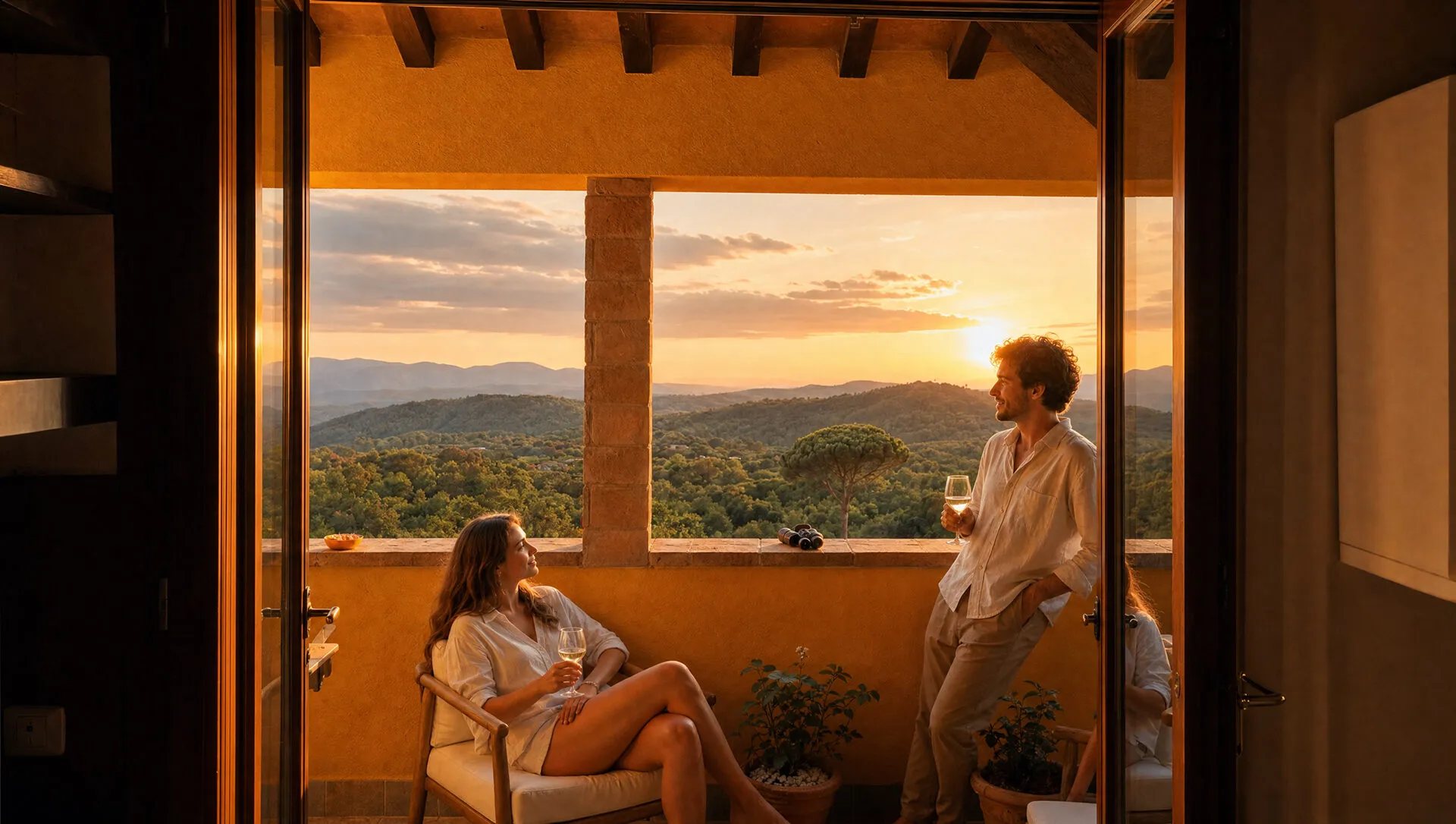
Late in the afternoon, as the light softens and the worst of the heat lets go, the towns come back to life, and with them comes one of the loveliest habits in Italian life. The passeggiata is simply a walk, taken in the early evening, for no reason beyond the pleasure of it. Families come out. Old friends fall into step. Children run ahead. Everyone dresses a shade better than the errand requires and processes slowly along the main street or the seafront, greeting, pausing, being seen and seeing. Nothing is bought and nowhere is reached. That is the whole point. It is a society taking its own temperature, gently, every single evening, and you are welcome to join it. Walk slowly. Stop often. Nod to strangers. You will fit right in.
The Aperitivo Hour
Then comes the hinge of the whole day, the hour that turns afternoon into night: the aperitivo. As the sun drops, the bars set out their small plates, and people gather to bridge the gap before dinner. This is not a meal and not quite a drink. It is a pause with company, an hour of olives and crostini and little bites, taken at an outdoor table while the light does something remarkable to the buildings. In the countryside it is unhurried and warm. On the coast it comes with the sea going gold. Either way it is the moment the day exhales.
A note in fairness, since the aperitivo usually arrives with a glass in hand. Italy is under a temporary rule that has paused the serving of alcohol, and every proper bar, ourselves among them, is honoring it for as long as it holds. Happily, the ritual was never really about what was in the glass. It was about the hour, the plates, the company, and the light. A well-made non-alcoholic spritz or a cold pressed juice sits just as nicely on the table, and the conversation runs exactly as long. When the toasts return, they will taste of the wait. Until then, the sunset does the heavy lifting, and it always has.
Dinner Is the Destination
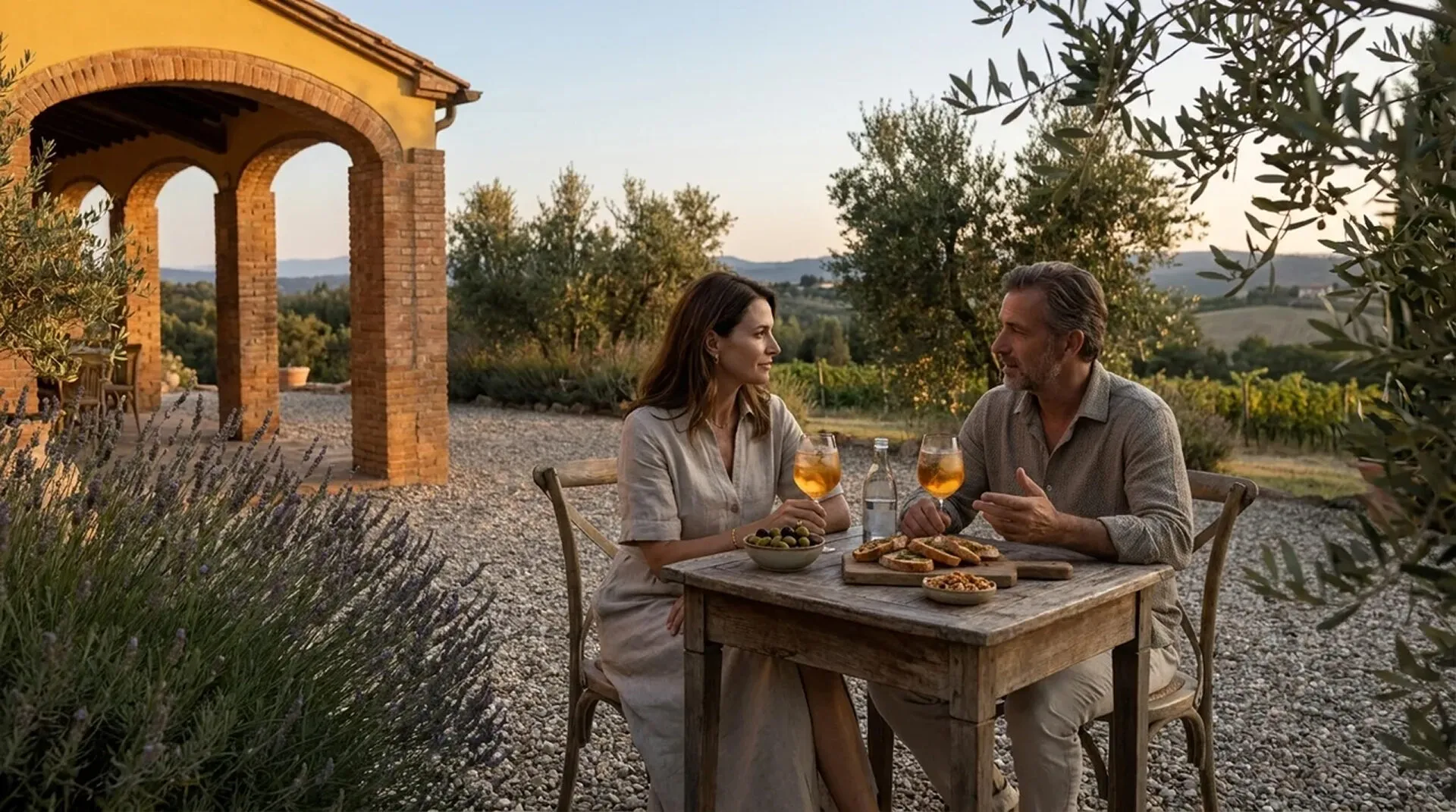
Everything the day has done has been leading here, to a long dinner eaten late and outdoors. The Tuscan evening meal is not rushed and not early. Kitchens warm up around half past eight, and a table at nine is entirely ordinary. The food comes in courses, unhurried, a little antipasto, then pasta, then something from the grill, then cheese, then a sweet, then coffee, then more talk. It can stretch across two or three hours and nobody minds, because the meal is not a refueling stop. It is the event. It is where the day was always going.
Eat outside if you possibly can, under a pergola or the open sky, with the candles lit and the air finally cool. At the estate this is our favorite hour of all: a long table on the terrace, the valley going dark below, the food coming out of the kitchen in no particular rush, the conversation looping and pausing and starting again. There is no signal that dinner has ended. It simply thins, softens, and gives way to the quiet, and someone eventually looks up and notices how many stars have come out.
Living the Rhythm
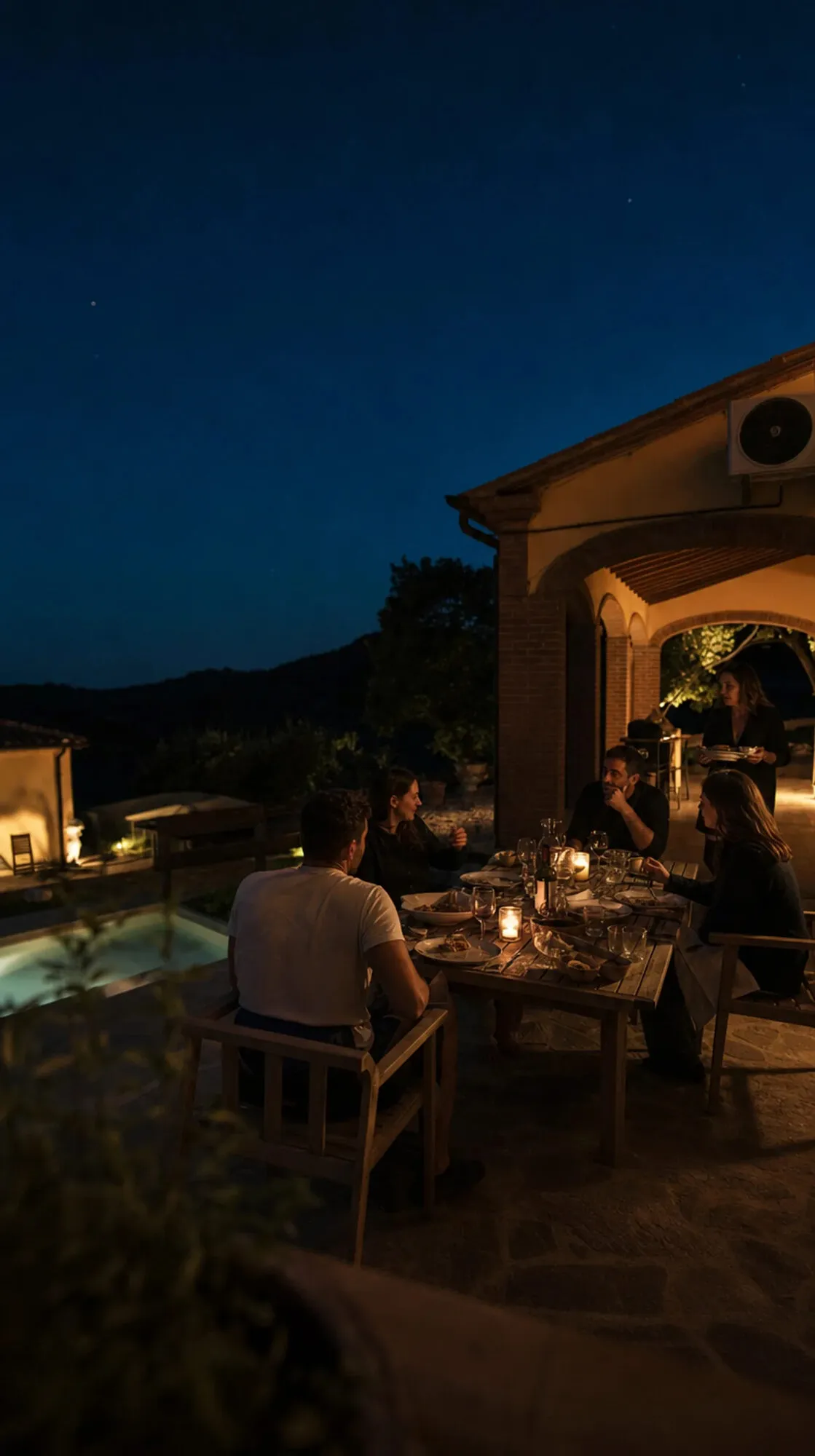
That is a Tuscan day, start to finish. Coffee at the counter, the market before the heat, the long pause at noon, the walk at dusk, the plates at sunset, the late and lingering dinner under the sky. You cannot rush it, and the joy is in not trying. Most guests spend a day or two out of step, checking the clock, wondering why the shops are shut. Then something loosens, and they stop asking, and they start living to the tempo instead. That is the moment the holiday truly begins.
We built this place to make that easy. The rhythm is already here, in the light and the hours and the pace of the hill. All you have to do is arrive, put the watch in a drawer, and let the day carry you. It knows the way. It has known it for a very long time.
Frequently Asked Questions
Why do shops close in the middle of the day in Tuscany?
Because of the riposo, the traditional midday pause. When the sun is at its hottest, towns quiet down for lunch and rest, usually from around one until late afternoon. It is a sensible rhythm, and joining it is part of the pleasure.
What is the aperitivo?
The pre-dinner ritual of gathering for a drink and small plates as the sun sets. It is less about the food or the glass than about the hour and the company. A temporary rule has currently paused the serving of alcohol, so non-alcoholic options stand in for now.
What are the rules about ordering coffee?
Espresso any time, especially after meals, taken standing at the bar. A milky coffee such as a cappuccino is a morning drink, rarely ordered after eleven. It is a soft social code rather than a real law, but locals notice.
What time is dinner in Tuscany?
Late by many visitors' standards. Kitchens get going around half past eight, and a nine o'clock table is normal. Meals are long and come in courses, best enjoyed outdoors and without hurry.
Can I experience this daily rhythm at Villa Dolce Vita?
Entirely. The estate is built for it: slow breakfasts, a midday pause by the pool, and long dinners on the terrace under the stars. We can also arrange market visits and dinners to match the local pace.